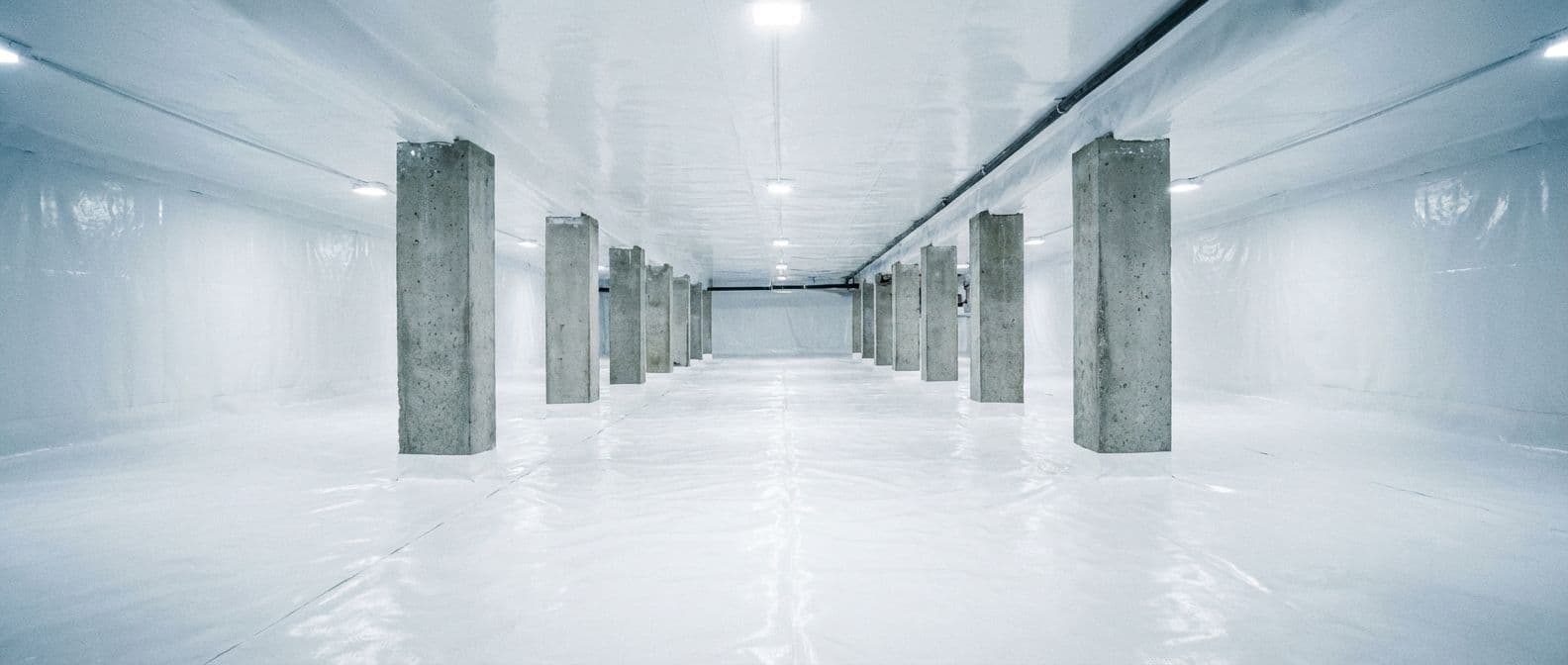
In the high-stakes world of luxury residential construction, the glamour often lives in the finishes—the Italian marble, the vaulted ceilings, the panoramic windows. However, as any Master Builder knows, the soul of a home resides in its foundation. If the foundation falters, the marble cracks. If the spacing is off, the floors bounce. This is why at Deluxe Art Homes, we obsess over what lies beneath: The Crawl Space Foundation.
This is not merely a dirt floor under a house. It is a sophisticated suspension system, engineered to defy gravity, soil shifting, and moisture. In this comprehensive guide, we strip away the floorboards to reveal the engineering marvel of proper foundation cross-spacing and encapsulation.
The Anatomy of a Superior Crawl Space
To understand the importance of spacing, one must first understand the anatomy of the system. A crawl space foundation elevates the living structure 18 to 48 inches (or more) above the natural grade. This elevation is achieved through a hierarchy of load-bearing elements:
- The Footing: A massive ribbon of reinforced concrete poured deep into the earth. This is the "shoe" of the house, spreading the point loads of the structure across the soil.
- The CMU Piers: Concrete Masonry Units (blocks) stacked vertically. These are the "legs" standing on the footing.
- The Girders (Beams): Massive horizontal timbers or steel beams that rest on top of the piers.
- The Joists: Smaller horizontal members that run perpendicular to the girders, supporting the subfloor.
The magic happens in how these elements interact. If the "Cross-Spacing" (the distance between piers) is too wide, the girders sag. If it is too narrow, you waste materials and obstruct access. The sweet spot is a calculation of physics, not guesswork.
The Science of Cross-Spacing: Why Distance Matters
"Cross-spacing" refers to the grid intervals of your foundation piers. In standard builder-grade construction, you might see piers spaced 8 to 10 feet apart. While this meets minimum code requirements (IRC), it often results in a floor system that feels "soft" or "bouncy" when you walk across it.
At Deluxe Art Homes, we engineer for Rigidity, not just safety. We tighten our cross-spacing tolerances. By reducing the span between piers—often calculating for higher "live loads" (furniture, people, parties) and "dead loads" (stone countertops, heavy tile)—we eliminate deflection. Deflection is the microscopic bending of wood under weight. Over time, deflection causes drywall cracks and squeaky floors. Our tighter spacing ensures that your luxury home feels as solid as a slab of granite, regardless of spans.
We also calculate the Tributary Area for each pier. A central pier carries 4x the weight of a corner pier. Therefore, our central piers are often fortified, filled with concrete and rebar, creating a spinal column of immovable strength running through the center of your home.
Material Integrity: Not All Concrete is Created Equal
Spacing is irrelevant if the materials crumble. We utilize 3000+ PSI concrete for all footings—significantly higher than the residential standard. Furthermore, our piers aren't just dry-stacked blocks. They are bonded with Type-S mortar and, in critical load zones, fully grouted (filled solid with concrete) and reinforced with vertical rebar. This ties the house to the earth, providing resistance against uplift forces during hurricanes—a crucial consideration for South Carolina coastal living.
The Humidity War: Vented vs. Encapsulated
This is the most critical evolution in modern building science. For decades, codes required "venting" crawl spaces to let air flow. In the dry climates of Arizona, this works. In the humid, subtropical climate of Myrtle Beach, it is a disaster.
The Physics of Failure:
When you open vents in summer, hot, humid air (90°F, 80% humidity) enters the cool, shaded crawl space (70°F). When hot, wet air hits cool surfaces (like ductwork or floor joists), it hits the "Dew Point". The water condenses. Wood absorbs it. Mold grows. Termites feast.
The Deluxe Solution: Encapsulation
We treat the crawl space as a mini-basement:
- Seal: We close all vents permanently.
- Wrap: A thick, 20-mil commercial-grade vapor barrier wraps the entire earth floor and runs up the foundation walls, sealed at every seam.
- Insulate: We insulate the walls, not the subfloor, keeping the crawl space temperature close to the house temperature.
- Condition: We install a dehumidifier or a small supply of HVAC air.
The result? A dry, clean, conditioned space where wood rotting is physically impossible because the moisture content is controlled.
Comparison: Slab vs. Crawl Space
Why clear land and build a crawl space when you could just pour a slab?
- The "Feel" Factor: Slabs are hard. Walking on concrete all day is tough on joints. A wood-framed floor over a crawl space has a natural, microscopic "give" that is far more comfortable for human ergonomics.
- The Repair Factor: If a drain line breaks under a slab, you are jackhammering your expensive Italian tile. In a crawl space, a plumber crawls in, cuts the pipe, fixes it, and leaves. No mess.
- The Flood Factor: In coastal zones, elevation is survival. A slab sits on the ground. A crawl space lifts your biggest asset out of the flood plain.
Conclusion: The Hidden Luxury
True luxury is peace of mind. It's knowing that 30 years from now, your floor won't sag. It's knowing you won't breathe mold spores from a damp foundation. It's knowing that the engineering calculations behind your cross-spacing were done with 200% safety margins, not the bare minimums.
At Deluxe Art Homes, we don't just build houses to look good for the open house. We build foundations to last for generations. This is the art of engineering.